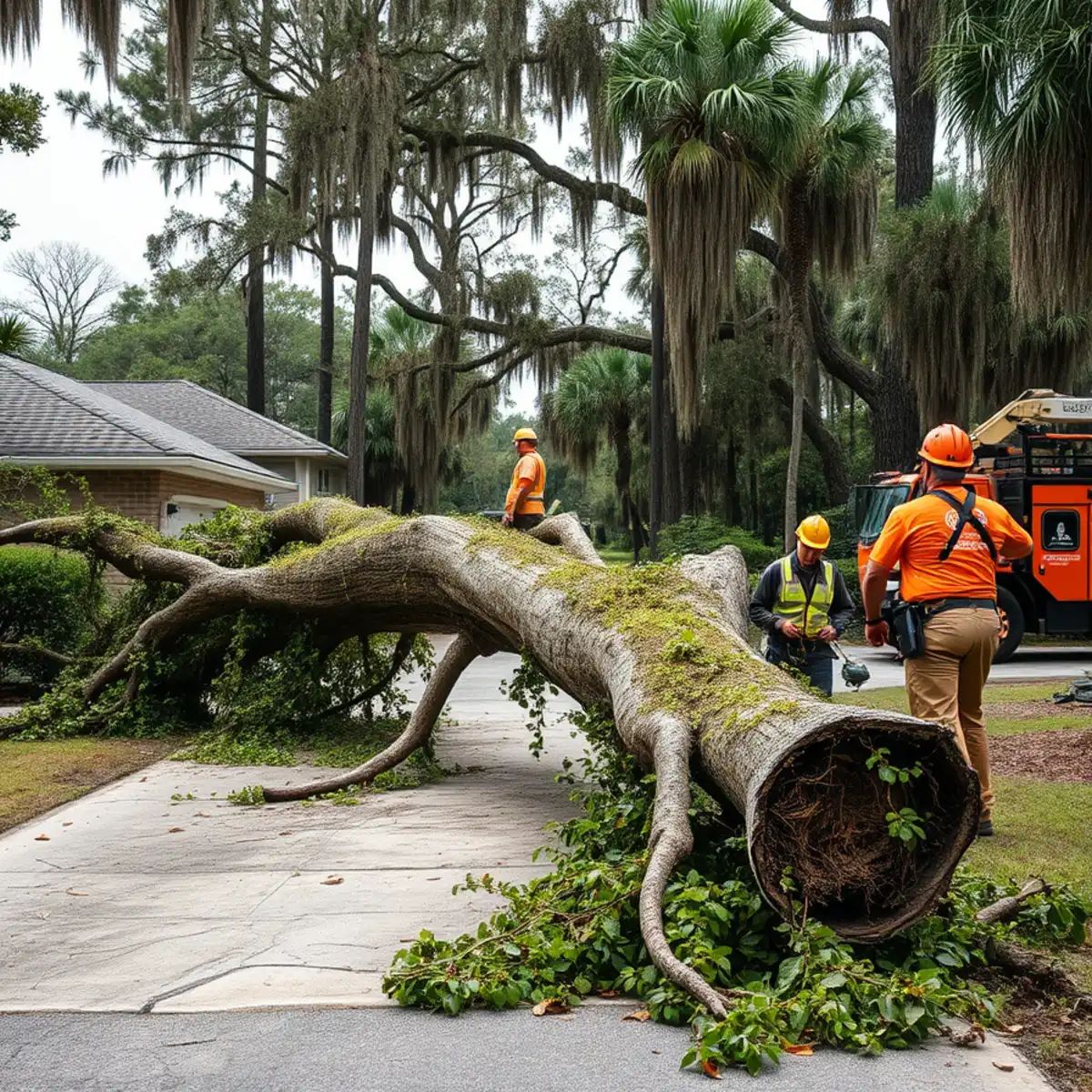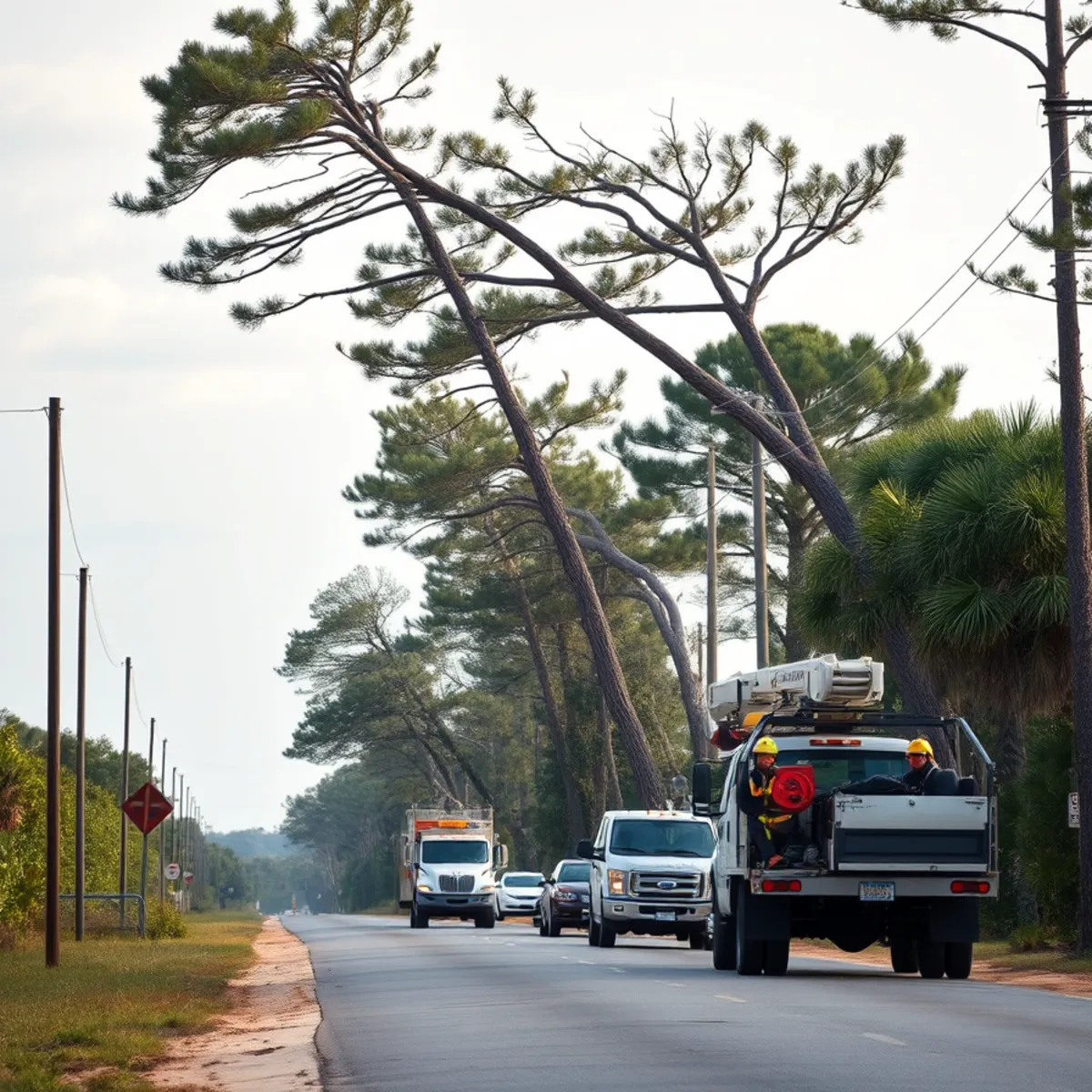
Hanging Limb Over Your Roof? Why You Shouldn't Wait for the Next Storm
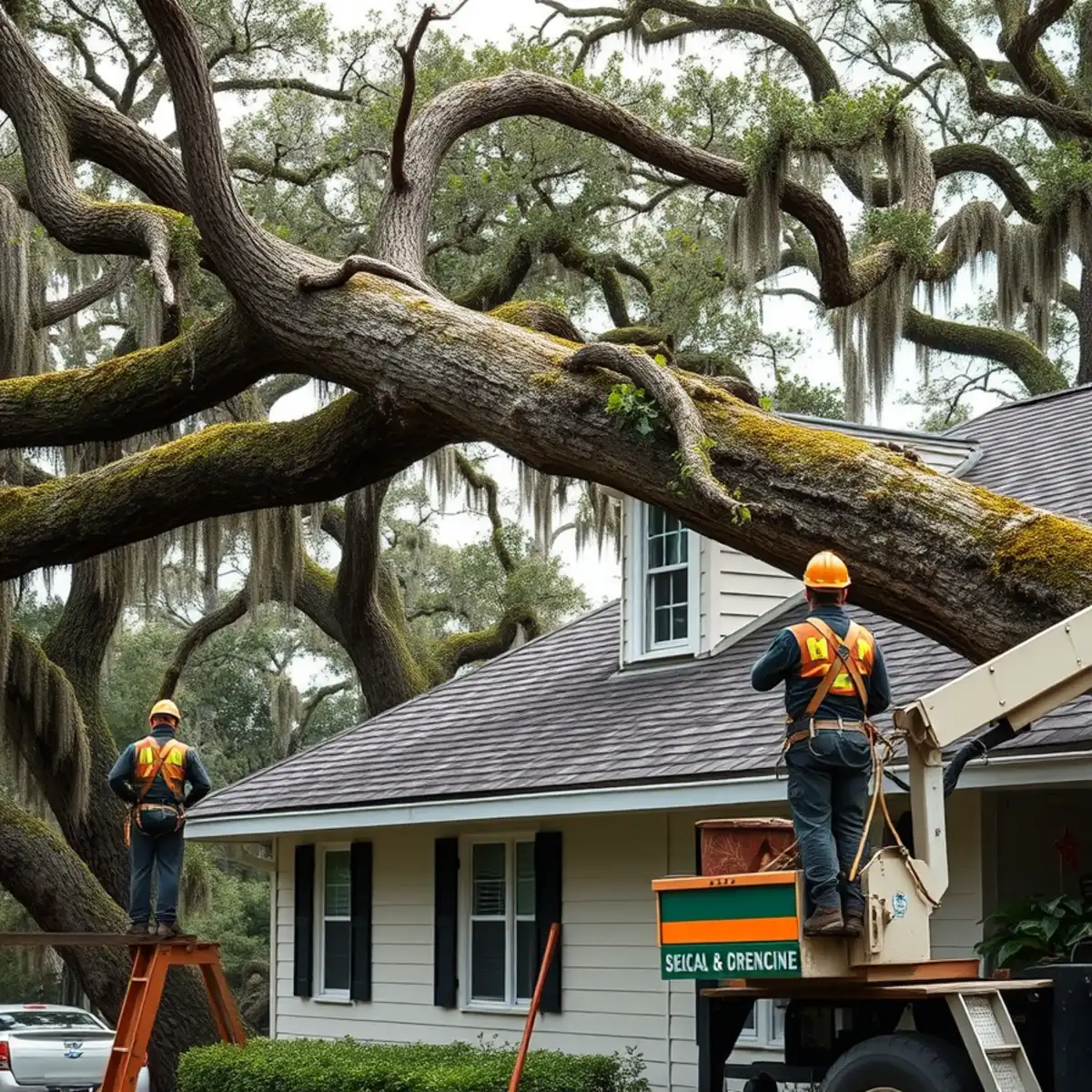
You noticed it after the last round of storms: a limb up in the canopy that is clearly broken but has not come all the way down. It is resting on other branches, or hinged on a strip of bark, hanging right over the roof or the back deck. Every arborist has a name for these, and none of them are friendly. We call them widowmakers, and the name is not marketing.
Why a hung-up limb is more dangerous than it looks
A limb that broke but did not fall is holding potential energy in a way an intact branch is not. It is no longer attached the way the tree engineered it to be. What is keeping it up there, friction against other branches, a hinge of bark, a fork it dropped into, can all release with no warning: a gust of wind, a bird, a temperature swing that shifts the wood. When it lets go, it comes straight down with the full weight and speed of a dropped log, and it does not care whether you are on the deck below.
The waiting math never works in your favor
The temptation is to wait and see if it falls on its own, ideally into the yard instead of onto the shingles. I understand the logic, but it rarely plays out that way, and here is the honest accounting of what waiting actually risks:
- Roof damage: a limb through the roof deck means water intrusion, and water damage compounds fast in our humidity.
- A bigger failure: the broken limb is often a sign the union is compromised, and the next storm can bring down far more than that one branch.
- Insurance friction: if an insurer decides you knew about an obvious hazard and did nothing, a later claim can get complicated. Neglect is a word that shows up in denials.
- A dead-of-night emergency: the same limb removed calmly on a Tuesday becomes an after-hours emergency call at storm rates once it comes through the ceiling.
Planned removal versus emergency response
There is a real distinction here worth understanding. If the limb is stable enough to wait a day or two and nothing is under it, this is a job for a proper tree trimming and pruning crew that will take the limb down cleanly, make a correct cut back to the collar, and check the rest of the canopy for other hangers you have not spotted. If it is over a bedroom, cracked and clearly ready to go, or already partway through the roof, that is squarely emergency tree service territory and should not sit overnight.
We handle both across the west side and south of the river, so whether you are out in the newer subdivisions around Pooler or down toward Richmond Hill, the same crew can tell you honestly which category yours falls into over the phone.
How the pros take one down safely
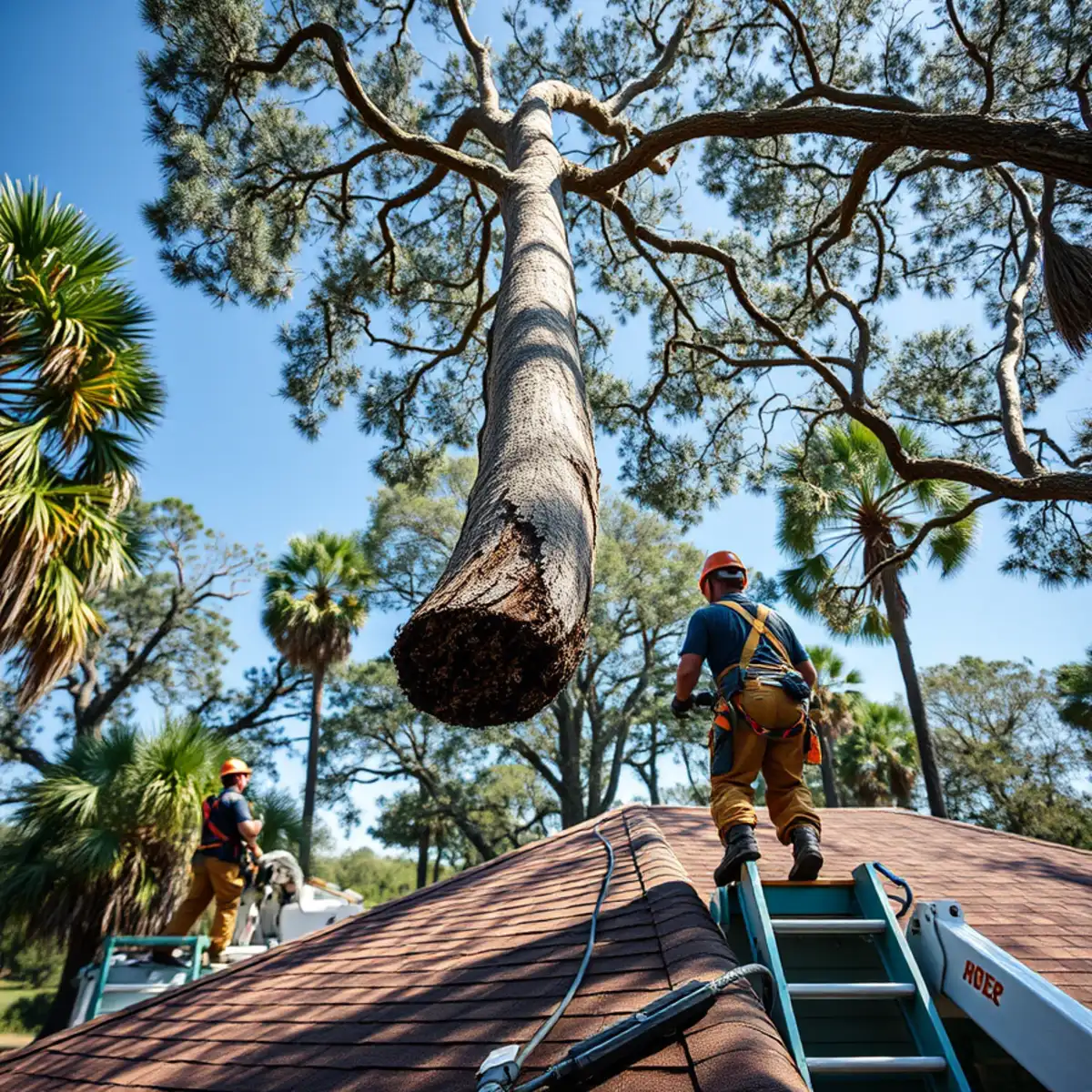
A trained climber or bucket operator approaches a hanger from above or the side, never from directly underneath. The limb gets rigged with rope so its fall is controlled and lowered, not dropped, onto whatever is below. On a limb hung over a roof, that controlled lower is the entire point: it is what keeps the removal from doing the exact damage you hired someone to prevent.
The cheapest time to deal with a hanging limb is always before it decides for you.
What to do right now
- 1Rope off or block the area beneath the limb so no one walks under it.
- 2Move vehicles, grills, and furniture out from underneath.
- 3Take a few photos from a safe distance for your records.
- 4Call a crew and describe what is holding the limb up so they can gauge urgency.
A hanging limb is one of the few tree problems where the fix is genuinely straightforward and the delay is the expensive part. Deal with it while the weather is calm and it is a routine cut. Wait for the next storm and you are calling from a hallway with a tarp over the ceiling.
Frequently Asked Questions
No. Disturbing a hung-up limb from below is exactly how people get seriously hurt. It can release instantly and fall on you. Keep everyone clear and let someone approach it from above with rigging.
Not necessarily. Hangers can sit for weeks and then drop with the first strong gust once the branches holding them shift or rot. Time up there is not proof of stability, it is borrowed time.
A single accessible limb is on the lower end of pruning work, often well under the typical pruning range. The far more expensive scenario is the roof repair after it falls, so prompt removal is usually the frugal choice.
Need help with a tree in the Savannah area?
Free estimates and 24/7 emergency dispatch across coastal Georgia.