Laurel Wilt Is Killing Redbays Across Coastal Georgia: What to Look For
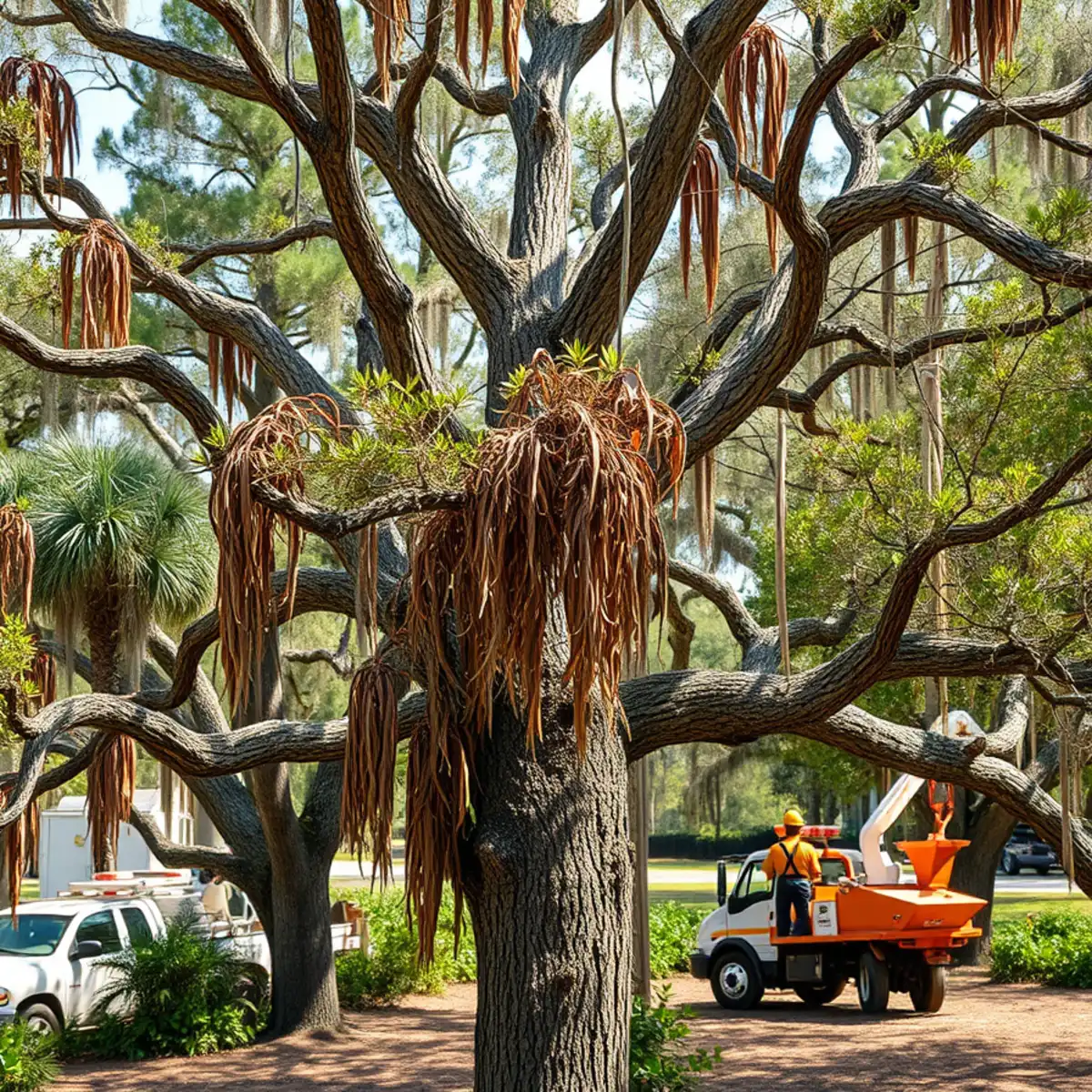
You walk your property in June and a redbay that was fine last month has a whole limb of brown, curled leaves that never dropped. The rest of the canopy still looks green. A few weeks later, more of it browns out. If that sounds familiar, you are almost certainly looking at laurel wilt, and I want to be straight with you about what that means before you spend money hoping otherwise.
Laurel wilt has been marching through the coastal counties for years now, and it does not slow down. On the properties we walk in Chatham County, redbay is often the first casualty, followed by sassafras and any avocado you were nursing along. It is not a maintenance problem you trim your way out of. It is a vascular disease, and once a redbay is symptomatic, the outcome is usually fixed.
What laurel wilt actually is
The disease is a fungus, Raffaelea lauricola, carried by the redbay ambrosia beetle. The beetle is smaller than a grain of rice. It bores into the sapwood and introduces the fungus, which the tree tries to wall off by plugging its own water-conducting vessels. That defensive plugging is what kills it: the tree essentially cuts off its own water supply. This is why a redbay can go from healthy-looking to dead in a single growing season, and sometimes in a matter of weeks.
Because it is in the plant family Lauraceae, the disease targets redbay, swampbay, sassafras, pondspice, and cultivated avocado and camphor. Live oaks, pines, and maples are not hosts, so this is not a whole-yard emergency the way a pine beetle outbreak can be. But for anyone with redbay in the understory, and that is most wooded lots from Darien up through the marsh hammocks, it is a slow, steady loss.
The signs, in the order you usually see them
- Sudden wilting on one section of the crown while the rest stays green. The leaves droop, then turn reddish-brown or purplish.
- Dead leaves that cling to the branch instead of dropping. This flagging is the giveaway; a drought-stressed tree usually sheds.
- Toothpick-like tubes of compacted sawdust (frass) pushing out of the bark, or fine boring dust at the trunk base.
- A black or dark streak in the sapwood when you cut into an affected branch. Peel the bark and you will see the discoloration running with the grain.
- Rapid progression. What is one limb this month is often the whole tree by the end of summer.
Why treatment rarely makes sense for a yard redbay
People ask us to save these trees all the time, and I understand it. But a fungicide program only protects a tree that is not yet infected, and it is a recurring cost that can run into serious money over the life of the tree. On a landscape avocado you have babied for a decade, our tree health and disease treatment team can talk through whether preventive injection is worth it. On a wild redbay that is already flagging, the money is better spent taking it down cleanly. I would rather tell you that up front than sell you an injection that will not work.
When a dead redbay becomes a hazard
A laurel-wilt-killed redbay does not stay standing safely for long. The wood dries and gets brittle fast, and coastal storms find every weak union. Once the tree is dead, the beetles have moved on, so leaving it standing does not protect your neighbor's trees, it just leaves you with a hazard over a driveway, fence, or roofline. When one is dead and within striking distance of anything you care about, that is the point to schedule dead tree removal rather than wait for the next thunderstorm to decide the timing for you.
Can you slow the spread on your property?
Not much, honestly. The beetles fly, and firewood moves them faster than they move themselves, so the one concrete thing you can do is never haul redbay or sassafras firewood to a new location. Burn or chip infected wood on site. Beyond that, keeping your other, non-host trees healthy and well-watered is the best use of your energy, because a vigorous landscape absorbs the loss of an understory redbay far better than a stressed one.
What we do on an inspection
- 1Confirm it is laurel wilt and not drought, girdling roots, or a different pathogen, because the response is not the same.
- 2Assess the target zone: what the tree would hit if it failed, and how brittle it already is.
- 3Recommend removal timing, and whether nearby host trees are worth monitoring versus treating.
- 4Give you a written estimate that reflects access, size, and cleanup, not a guess over the phone.
Laurel wilt is one of those diseases where the kindest thing an arborist can do is not overpromise. If your redbay is symptomatic, plan for its loss and get ahead of the hazard. If you have healthy Lauraceae you genuinely want to protect, let us look before you commit to an injection program, so you spend money where it can actually do something.
Frequently Asked Questions
No. Once a redbay is showing wilt, the fungus has already plugged its water-conducting vessels and the tree cannot recover. Progression is usually fast, often killing the whole tree within a single season, so plan for removal rather than recovery.
Removal protects you from a falling hazard, but it does not stop the disease from spreading, since the beetles fly on their own. The one thing that genuinely helps is never moving redbay or sassafras firewood, which is how the beetle travels the fastest between properties.
No. Laurel wilt only affects trees in the laurel family, such as redbay, swampbay, sassafras, and avocado. Live oaks, pines, and maples are not hosts, so this is a targeted loss rather than a whole-yard threat.
Need help with a tree in the Savannah area?
Free estimates and 24/7 emergency dispatch across coastal Georgia.