Southern Pine Beetle in Southeast Georgia: Spotting an Infestation Early
The thing that makes southern pine beetle frightening is the speed and the way it moves as a group. One week you have a green loblolly; a few weeks later the top is fading yellow-green, then rusty red, and by the time you notice, the beetles have already launched into the pines beside it. This is not a pest you can watch and wait on. If you own pines around Soperton or anywhere in the interior southeast, knowing the early signs is worth real money.
Why southern pine beetle is different from the other bark beetles
We have several bark beetles in Georgia pines, but southern pine beetle (Dendroctonus frontalis) is the one that builds a growing spot. It attacks in mass, overwhelms a tree's resin defense, and then the next generation moves outward, so infestations spread as an expanding pocket of dying trees rather than scattered singles. A healthy, vigorous pine can sometimes pitch the beetles out with resin. A stressed, crowded, or drought-hit pine usually cannot, which is why overstocked stands and lightning-struck or root-damaged trees are where spots start.
The signs, from the trunk up
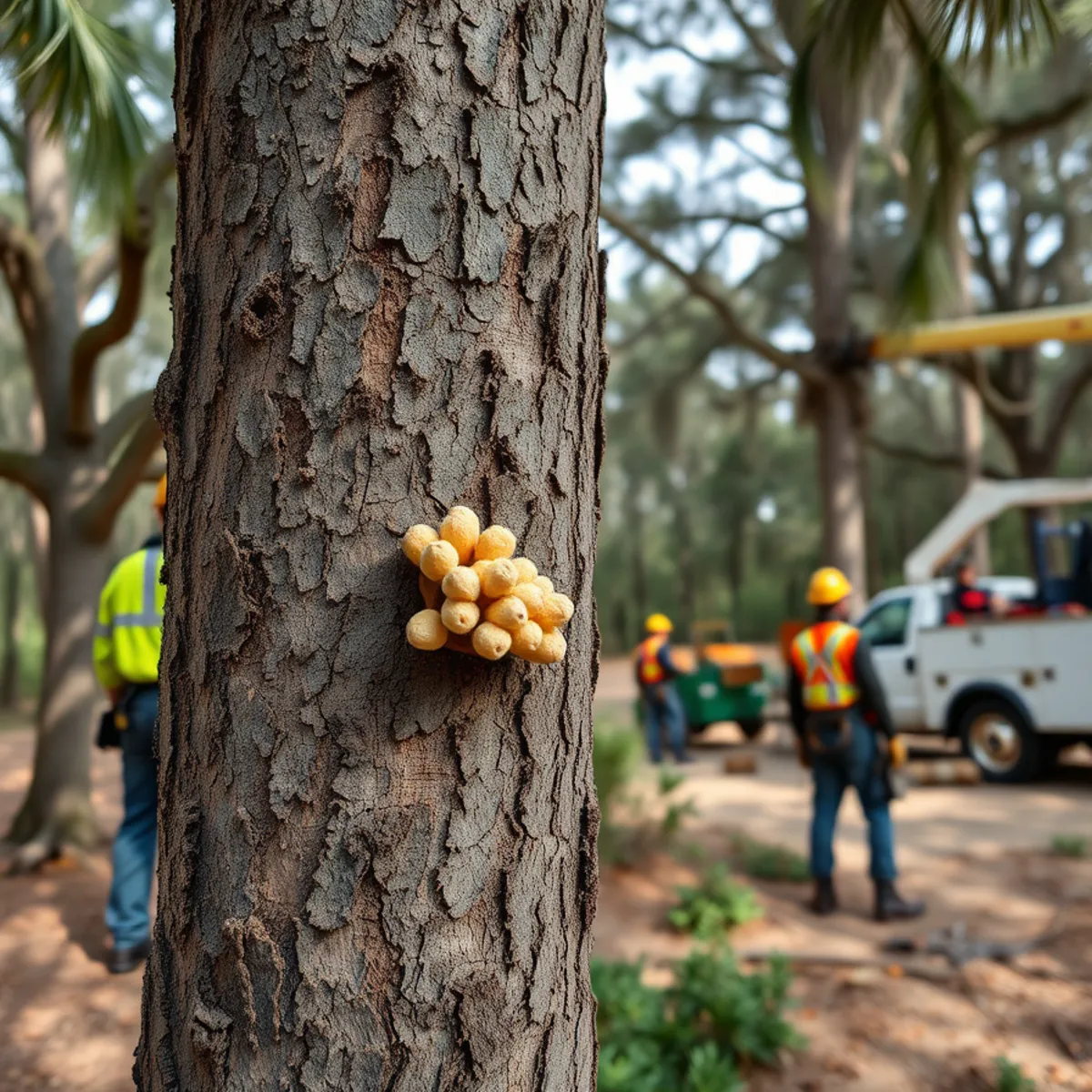
- Pitch tubes: small popcorn-sized lumps of resin on the bark, often white to reddish, where the tree tried to push the beetle back out. Look on the mid to lower trunk.
- Boring dust: fine reddish-brown sawdust in bark crevices, in spider webs against the trunk, or on the ground at the base.
- Fading crown: the top goes from healthy green to yellow-green, then red-brown. Once a crown is fully red, that tree is dead even if it still holds needles.
- S-shaped galleries: peel a patch of bark and southern pine beetle leaves winding, S-curved tunnels packed with dust. Ips beetles, by contrast, make Y or H shapes.
- A moving front: dying trees clustered together, with the freshest fading trees on one edge, is the signature of an active, spreading spot.
What the pitch tubes are telling you
Read the resin. Big, healthy-looking pitch tubes on a still-green tree can mean the tree is fighting and sometimes winning. Small, dry pitch tubes with lots of boring dust and a fading crown mean the beetles won and have likely already moved on to the next tree. That distinction matters, because it tells us which trees are lost and which part of the stand is the active front we need to get ahead of. When we walk a property, this is the map we are building before anyone starts a saw.
Can you treat your way out of it?
For a high-value yard pine that is not yet attacked, preventive trunk sprays exist and can be worth it, and our tree health and disease treatment crew can advise on whether a specimen pine near your house justifies it. But let me be honest: for an active spot in a stand of timber or a wooded backyard, spraying is not the answer. You cannot spray your way out of a moving infestation. The proven response is cut-and-remove, taking down the dead and dying trees and often a strip of green trees on the advancing edge so the beetles run out of fresh targets. Trying to save individual trees inside an active spot usually just donates them to the next generation.
Removal, and why the standing deadwood cannot wait
A beetle-killed pine dries out and becomes brittle quickly, and dead pines are notorious for dropping tops and whole trunks in storms. Around Baxley, where lots back up to timber, we regularly see beetle-killed pines leaning over sheds, fences, and power drops. Once a pine is dead, scheduling dead tree removal is about your safety, not saving the tree, and clearing the killed wood also removes the brood so it is not feeding the spot. The two goals line up.
How to lower your risk going forward
- 1Thin overcrowded pine stands so remaining trees keep enough vigor to defend themselves with resin.
- 2Avoid wounding roots and trunks with equipment, especially during warm-season beetle flights.
- 3Water valuable landscape pines through drought, since drought stress is a classic trigger for a spot.
- 4Walk your pines every few weeks in summer and act the moment you see clustered fading crowns.
If you have pines and you notice even two or three neighboring trees fading together with pitch tubes on the bark, do not wait to see if it settles down. Have someone look this week. Southern pine beetle rewards fast, decisive action and punishes patience, and the difference between catching a spot at three trees versus thirty is usually just how quickly someone made the call.
Frequently Asked Questions
Very fast. During warm months a mass attack can overwhelm and kill a pine in a matter of weeks, and the crown may still hold red needles after the tree is already dead. Because the spot spreads to neighboring trees each generation, delay usually means losing far more trees.
Peel a patch of bark and look at the gallery shape. Southern pine beetle carves winding, S-shaped tunnels packed with dust, while Ips beetles make Y- or H-shaped galleries. Southern pine beetle also builds expanding spots of clustered dying trees, whereas Ips tends to hit scattered, already-stressed trees.
Preventive trunk sprays can be worthwhile for a specific high-value yard pine that is not yet attacked, and an arborist can advise on that. But you cannot spray your way out of an active, spreading spot; removing infested trees and a green buffer at the leading edge is the proven way to stop it.
Need help with a tree in the Savannah area?
Free estimates and 24/7 emergency dispatch across coastal Georgia.