When a Tree Removal Needs a Crane (and When It Doesn't)
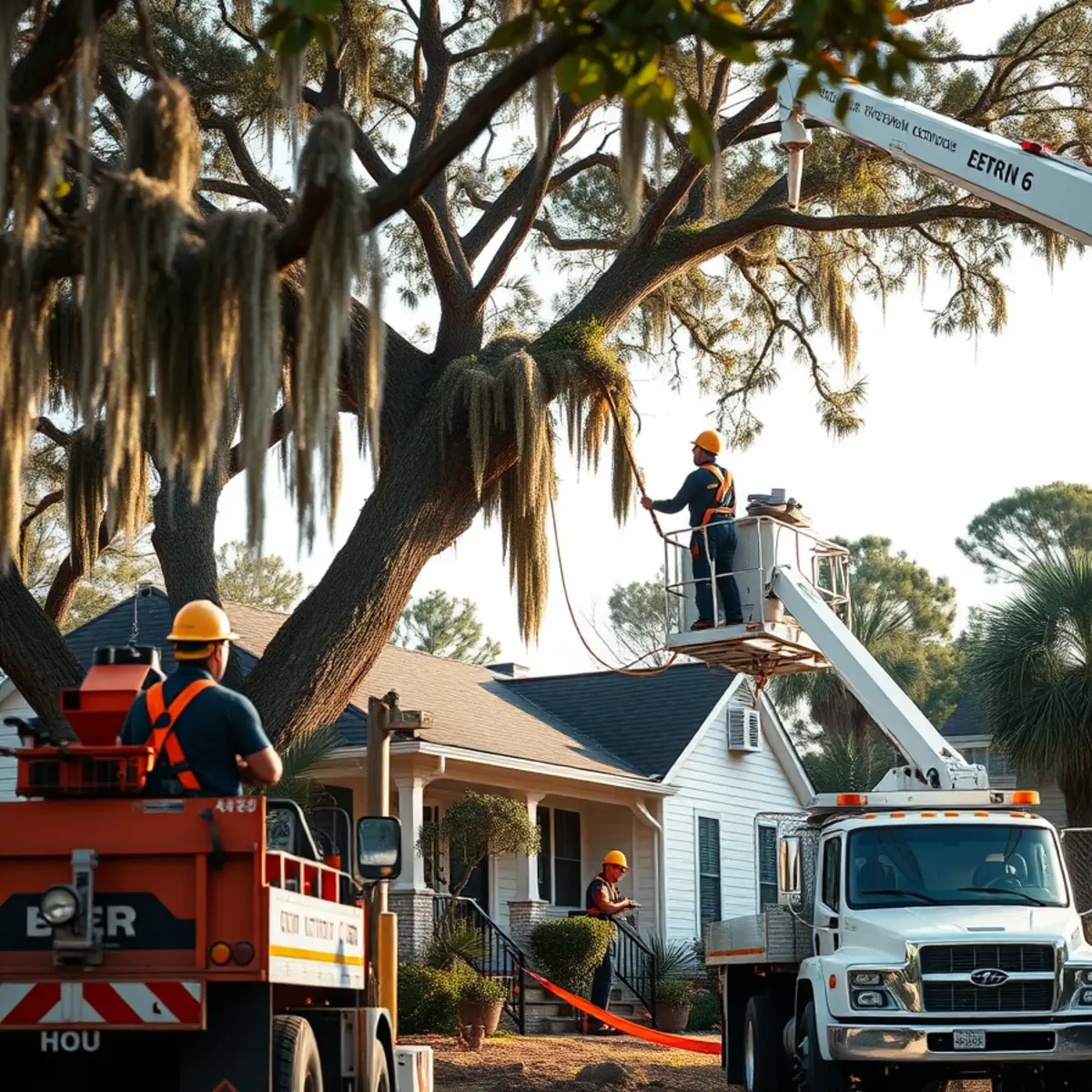
A crane on a tree job looks impressive, and homeowners sometimes assume the biggest, most dangerous tree automatically needs one, or worse, that a crane is a way to save money because it is fast. Neither is quite true. A crane is a tool, and like any tool it is the right answer for some jobs and overkill for others. Here is how we actually decide.
What a crane really buys you
A crane does two things a climbing or bucket-truck removal cannot do as well. First, it removes the wood as controlled, hanging weight, so heavy limbs and trunk sections never free-fall onto whatever is below. Second, it lets us pick pieces up and over obstacles, a roof, a pool, a fence, a neighbor's shed, and set them down in a clear drop zone instead of rigging them down inch by inch through the canopy. When the target below the tree is expensive or fragile, that control is the whole point.
When a crane earns its keep
- A large or heavy tree directly over the house, where dropping or rigging pieces through the canopy risks the roof.
- A dead or storm-damaged tree that is too unsound to climb safely, so we keep the climber out of it and let the crane hold the wood.
- Tight sites, courtyards, marsh-edge lots, or narrow historic streets, where there is no room to lower wood conventionally.
- A tree that has already failed onto a structure and needs sections lifted off without shifting the load unpredictably.
- Big overextended limbs reaching over a pool, screened porch, or neighbor's property with nowhere below to work.
For the classic worst case, a large tree leaning over or already resting on a roof, a crane paired with our tree on house removal approach is often the safest option on the board, because it lets us relieve the load and lift the wood clear rather than climbing a compromised tree above your living room. On the tight, established lots around Isle of Hope, where mature oaks stand a few feet off the house with a driveway on one side and marsh on the other, the crane is frequently what makes the job possible at all.
When you don't need one
Plenty of removals do not justify a crane, and a good outfit will tell you so. A sound tree with room around it can be climbed and rigged, or felled outright, safely and for less. A modest tree in a normal yard, a leaner in an open area, or anything where we have a clear drop zone usually comes down cleanly without the crane's setup cost. Bringing a crane to a job that does not need one just adds mobilization expense and, on some sites, an access headache getting the machine into position. Our straightforward crane tree removal recommendations always start by asking whether a simpler method does the job as safely, and if it does, that is what we quote.
What drives the cost either way
People want a number, so here are planning benchmarks, with the honest caveat that only an on-site inspection sets the real quote. A large removal with stump work commonly lands somewhere in the range of $1,850 to $7,350, often around $3,200, and a medium removal frequently runs $550 to $2,300. A crane can raise the day rate but sometimes lowers the total by turning a two-day rigging job into a half-day lift, especially on the barrier islands like St. Simons Island where labor time in a tight canopy adds up fast. The variables that move the price most are access for the machine, the number and weight of picks, proximity to structures and power lines, and how much cleanup and stump grinding you want.
How we decide on your tree
- 1Assess the tree's soundness. If it is too decayed or damaged to climb, that pushes toward a crane.
- 2Map the targets below and around it, and whether there is any safe drop zone.
- 3Check access: can a crane physically reach a set-up spot near the tree, and are power lines in the way?
- 4Compare methods on safety first, then total cost and time, and recommend the one that protects your property best.
The short version: let the tree and the site decide, not the drama. A crane is the right call when control over the load and clearance over your house matter more than anything, and it is the wrong call when a sound tree and an open yard let us do the job more simply. A trustworthy arborist will happily talk you out of a crane you do not need.
Frequently Asked Questions
No. Tree size matters less than what is underneath it and whether there's a safe place to put the wood. A large tree in an open yard can often be felled or rigged down without a crane, while a medium tree hanging over a roof with no drop zone may genuinely need one.
Not always. A crane can raise the day rate, but it sometimes lowers the total by turning a slow, multi-day rigging job into a short lift. On tight sites near structures, the time saved can offset the machine cost. Only an on-site inspection can set the real quote for your tree.
Because it lets us lift the wood off and away without climbing a compromised, load-bearing tree above your living space. A crane can relieve the weight in controlled sections and set them in a clear drop zone, which is usually far safer than rigging pieces down through a damaged canopy.
Need help with a tree in the Savannah area?
Free estimates and 24/7 emergency dispatch across coastal Georgia.