How Often Should Live Oaks Be Pruned on the Georgia Coast?
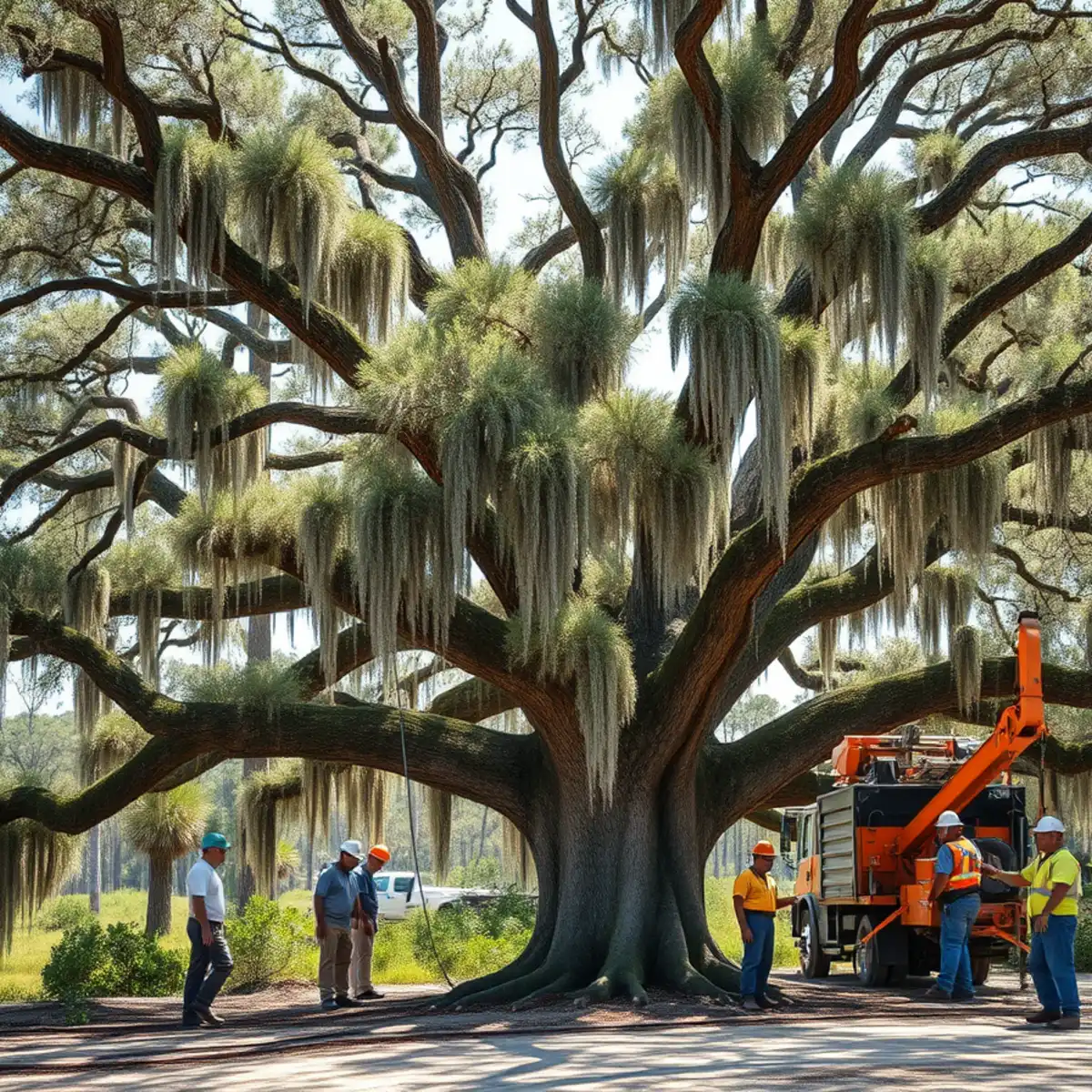
The live oak is the tree people move here for. Those low, sprawling limbs dripping with Spanish moss are the whole coastal Georgia postcard, and when you own a mature one, you rightly feel like a steward more than an owner. The most common question I get about them is also the one people most often get wrong: how often should I be pruning this thing? The honest answer is, less often than you would think, and far more carefully.
Mature live oaks need less pruning, not more
A healthy, established live oak is a slow, structurally sound tree that has spent a century figuring out how to hold itself up. It does not need annual shaping. For a mature specimen, a light maintenance pruning every three to five years is usually plenty, focused on removing deadwood and any defective limbs rather than reshaping a canopy that is already well built.
Young live oaks are the opposite. That is when structural pruning genuinely pays off, guiding the tree to a strong branch structure while the cuts are small and the tree responds well. Get the structure right in the first fifteen years and you save yourself and the tree decades of trouble.
The right season on the coast
Timing matters more for oaks than for most trees, and there is a real reason beyond aesthetics: oak wilt and other pathogens. The safest window for pruning oaks is the dormant season, roughly late fall through winter, when the tree is not actively pushing sap and disease vectors are least active. Pruning in the growing season is best limited to removing hazards that genuinely cannot wait.
- Dormant season (late fall to winter): the ideal window for planned structural and maintenance pruning.
- Growing season: reserve for genuine safety issues, dead or hanging limbs over targets, and storm damage.
- Just before hurricane season: a good time to remove deadwood and clear defects, done conservatively.
What proper live oak pruning looks like
Good pruning on these trees follows the ANSI A300 standards, which is the industry benchmark for how cuts are made and how much is removed. The principles are simple to state and easy to violate.
- 1Make clean cuts back to the branch collar, never leaving stubs and never cutting flush into the trunk.
- 2Remove no more than about a quarter of the live canopy in a single year, and usually far less on a mature tree.
- 3Prioritize deadwood, crossing and rubbing limbs, and any weak unions with included bark.
- 4Use a light crown reduction on overextended limbs rather than heading them back hard.
This kind of measured, standards-based work is the heart of proper live oak care, which treats the tree as a long-term asset rather than a hedge to be sheared. When the job is broader canopy maintenance across several trees, it falls under general tree trimming and pruning, but the oaks always deserve the more conservative hand.
Coastal pressures your oak is already fighting
Live oaks are tough, but coastal conditions add stress you should factor into a care plan. Salt spray near the water, compacted soil from construction, and root zone damage from paving all quietly weaken these trees over years. The single best thing you can do for a mature live oak is protect its root plate: keep heavy equipment, trenching, and fill dirt away from the critical root zone, because far more grand oaks are killed by root damage from a project than by anything a storm does.
You cannot prune a live oak into good health. You can only prune to keep a healthy one safe and sound.
A sensible schedule
For most mature coastal live oaks, the rhythm is a professional inspection every couple of years and a light pruning every three to five, timed to the dormant season, with any true hazard handled whenever it appears. Overpruning is a real and common mistake here, driven by the urge to tidy, and it does more harm than leaving the tree alone. We look after these trees all over the marsh-front communities, from Isle of Hope to the wooded lots on Skidaway Island, and more often than not the best advice we give an owner is to prune less and protect the roots more.
Frequently Asked Questions
For an established, healthy live oak, a light maintenance pruning every three to five years is usually enough, focused on deadwood and defects. Young oaks benefit from more frequent structural pruning while their branches are small.
The dormant season, roughly late fall through winter, is safest. The tree is not actively growing and disease vectors are least active. Save growing-season pruning for genuine hazards that cannot wait.
Yes. Topping severely damages live oaks, causes weak regrowth, invites decay, and destroys their natural form. If size is a concern, a conservative crown reduction by a qualified crew is the correct approach, not topping.
Need help with a tree in the Savannah area?
Free estimates and 24/7 emergency dispatch across coastal Georgia.