Salt Air and Your Trees: Coastal Tree Care from Tybee to St. Simons
If you live within sight of the water, your trees are dealing with something inland trees never do: salt. It comes in on the wind as spray, it soaks into the soil after a surge, and it burns foliage in ways that look like disease but are not. Understanding how salt hurts trees, and which trees can take it, saves you from both losing plants you love and wasting money treating the wrong problem.
The three ways salt gets your trees
Salt damage on the coast comes from more than one direction, and telling them apart matters because the response differs.
- Salt spray: wind carries fine salt off the water and deposits it on foliage, burning the leaf edges, especially on the windward side facing the ocean.
- Soil salinity: salt builds up in the root zone from spray, surge, or a rising salty water table, and it interferes with the roots' ability to take up water, effectively droughting the tree even in wet soil.
- Storm surge: a single flooding event can dump enormous amounts of salt into the soil at once, and the effects can show up weeks or months later as dieback.
That delayed reaction is what fools people. A surge floods the yard, the water recedes, everything looks fine, and then two months later a tree starts browning from the top and the edges. On the barrier islands, from Tybee Island out to the marsh hammocks, we see this pattern reliably after any significant surge event.
How to recognize salt damage
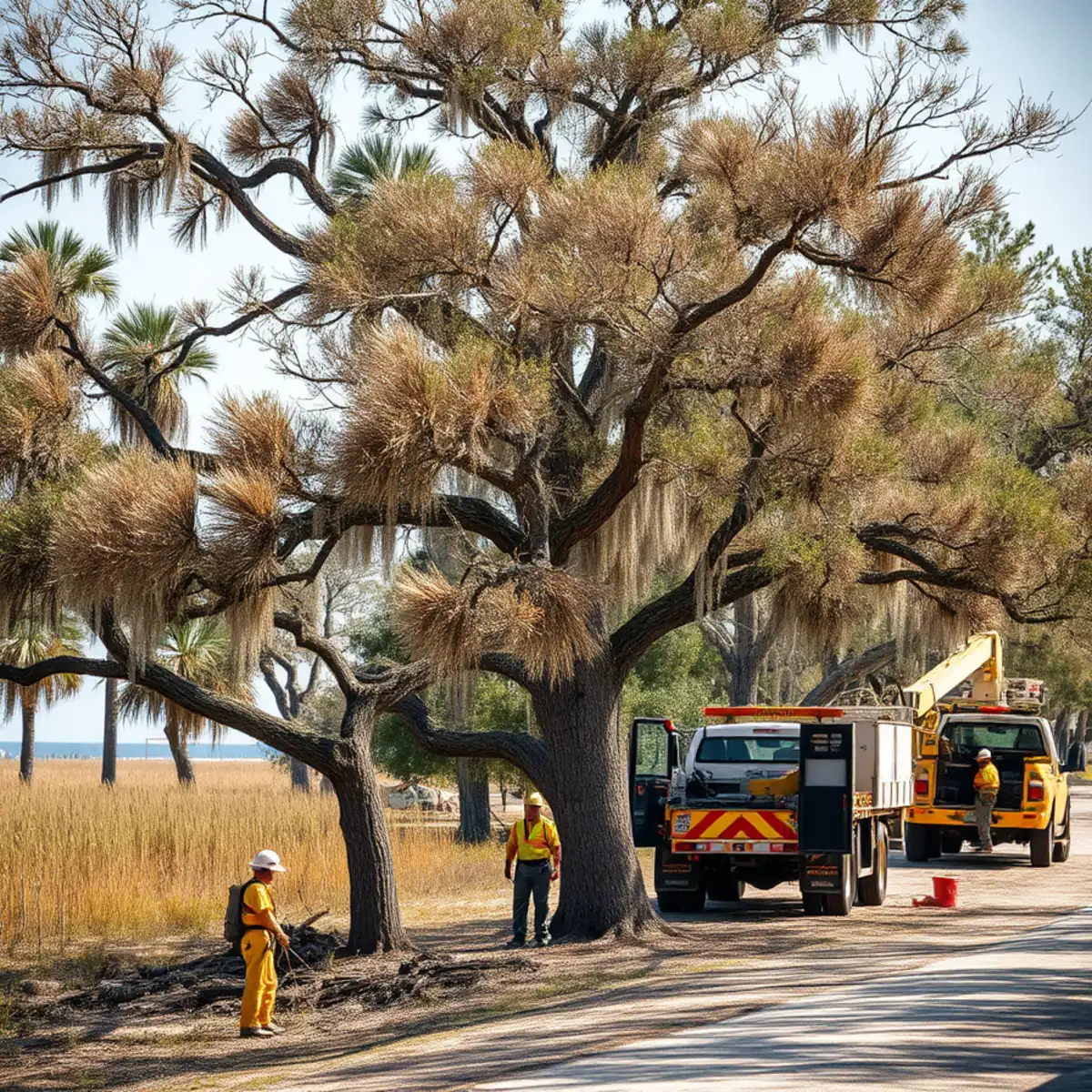
Salt injury has a look. Foliage browns at the tips and margins first, then works inward, and it is usually worse on the side of the tree facing the water. Evergreens go bronze or brown at the needle tips. Deciduous trees may leaf out sparsely or drop leaves early. Crucially, the damage is often lopsided, worse on the windward side, which helps distinguish it from a disease or root problem that tends to affect the whole tree more evenly. That said, salt-stressed trees are also more vulnerable to actual pests and pathogens, so the two can stack up.
Palms and salt: a natural fit, with limits
This is where palms earn their place on the coast. Many palms are genuinely salt-tolerant, which is why they thrive right up near the beach where oaks and pines struggle. But salt-tolerant is not salt-proof, and palms have their own care needs, particularly nutrient deficiencies that are common in sandy coastal soils and show up as yellowing or frizzled fronds. Proper palm tree service means feeding them the right way and pruning correctly, not over-trimming into the dreaded hurricane cut that actually weakens the palm. Done right, palms are the low-drama choice for the most exposed spots in your yard.
Helping stressed trees recover
- 1Flush the root zone with deep fresh-water soaks after any salt exposure, and keep the tree watered through dry spells since salt-stressed roots struggle to hydrate.
- 2Add mulch over the root zone to hold moisture and moderate soil, but keep it off the trunk.
- 3Hold off on heavy pruning of salt-burned wood until you can see what recovers; leaves may look dead while buds are still alive.
- 4Do not pile on fertilizer salts on an already salt-stressed tree; feed carefully and only when appropriate.
- 5Choose salt-tolerant species for replacements in the most exposed spots.
When a tree is declining and you are not sure whether it is salt, a nutrient issue, a pest, or all three, that is when an assessment pays for itself. Our tree health and disease treatment approach starts by figuring out what is actually wrong, because dumping fertilizer on a salt-stressed tree or spraying for a bug that is not there just wastes money and can make things worse. On the mainland-side islands like St. Simons Island, where big live oaks and salt exposure coexist, we spend a lot of time helping owners tell salt stress apart from the diseases that mimic it.
Planning for the long haul
You are not going to change the fact that you live near salt water, and honestly you would not want to; it is why the trees here have the character they do. The goal is to work with it: put salt-tolerant species in the exposed spots, keep your trees vigorous so they can shrug off spray, flush the soil after surge events, and get a professional eye on anything that starts declining before you guess at a treatment. Trees that are healthy going into a salt event handle it far better than trees already limping along.
Frequently Asked Questions
Look for browning at the leaf tips and margins that works inward, and note whether it's worse on the side facing the water. Salt injury is often lopsided toward the windward side, which helps distinguish it from disease or root problems that usually affect the whole tree more evenly.
Deeply and slowly soak the root zone with fresh water to leach the salt below the roots, and repeat it over the following days. Salt damage from surge can show up weeks later, so flushing early matters. Keep affected trees watered afterward, since salt-stressed roots struggle to take up water.
Often yes. Many palms are genuinely salt-tolerant and thrive in exposed spots where oaks and pines struggle. But they aren't salt-proof and have their own needs, especially nutrient deficiencies in sandy soil and correct pruning. Proper feeding and avoiding over-trimming keep them healthy.
Need help with a tree in the Savannah area?
Free estimates and 24/7 emergency dispatch across coastal Georgia.