Why Savannah's Sandy Soil Makes Healthy Pines Fall Over
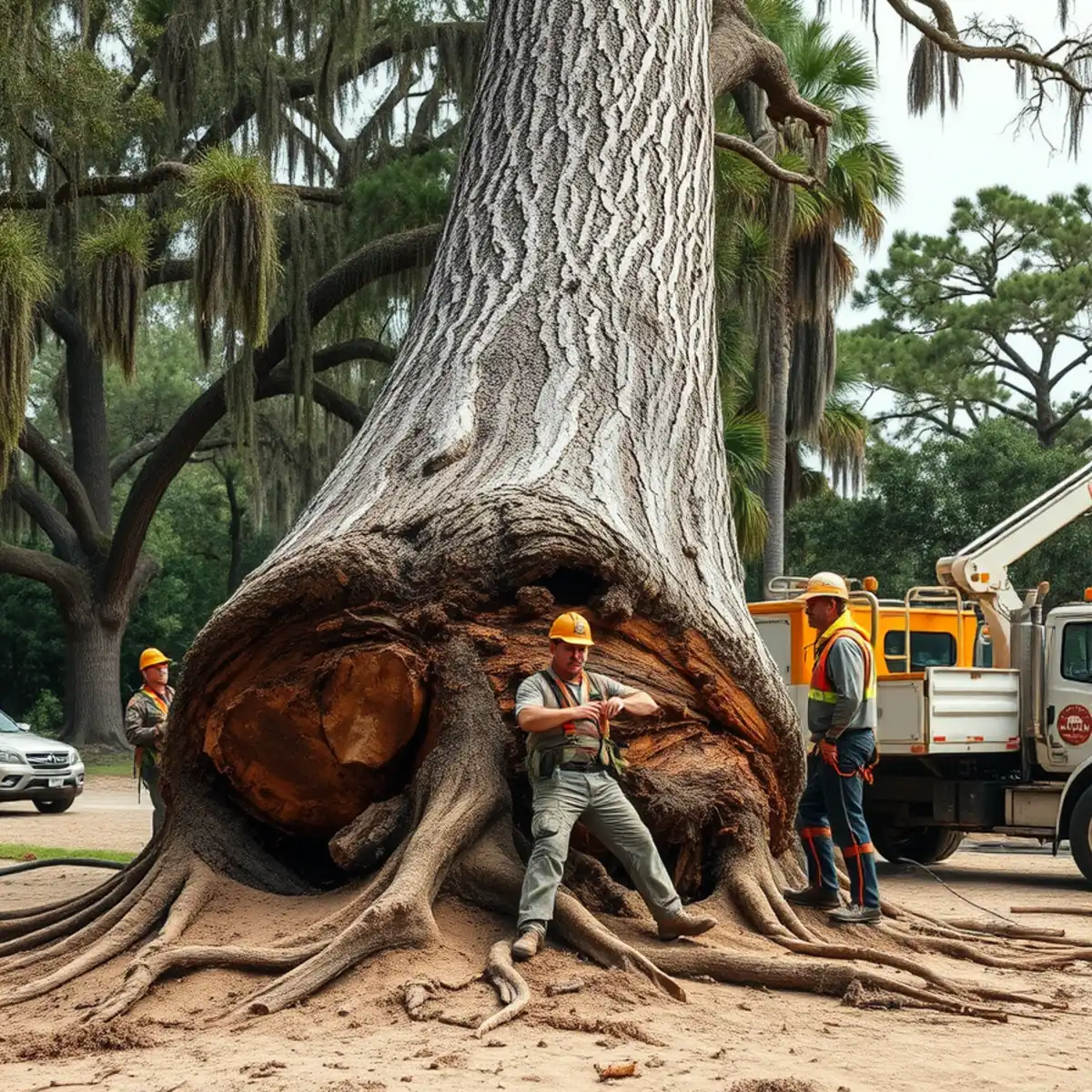
It rattles people when a pine that looked perfectly healthy, full green crown, no obvious rot, just lies down in a summer storm, its root plate tipped up out of the ground like a trapdoor. There was nothing wrong with the tree itself. The problem was underneath it, and around Savannah that underground story is mostly about sand and water.
Pines don't anchor the way you think
People picture a big taproot driving straight down like an anchor. Most mature pines around here do not have that. They rely on a broad, relatively shallow root plate, a wide disc of roots spreading out in the top couple of feet of soil, to stay upright. That system works well in firm ground. In loose sand, it has a lot less to grip, and when the soil is saturated, the grip gets worse fast.
What our soils do to that root plate
- Sandy soils are loose and drain fast, so roots have less structural resistance than they would in dense clay.
- The coastal water table is often high, and after heavy rain the soil around the root plate turns to saturated slurry.
- Saturated sand loses shear strength, so the root plate can rotate and lift under wind load it would normally shrug off.
- Pines are tall with high, catching crowns, so they present a big sail to the wind on top of a weak anchor below.
- Our storms deliver exactly the bad combination: heavy rain that soaks the ground, then strong gusts.
Put those together and you get the classic Savannah failure: a green, structurally fine pine that windthrows, roots and all, after a downpour softens the ground. It is why in low-lying areas like Port Wentworth, where the water table sits high and the soil stays wet, we see healthy pines go over in storms that barely touched trees on higher, firmer ground a mile away.
How to read your own pines
You do not need to be an arborist to catch the warning signs. Walk the base of your tall pines after big blows and look for soil that is cracked, mounded, or lifted on one side, that is the root plate beginning to rotate. A trunk that has gone from vertical to a noticeable lean since last year is telling you the same thing. Standing water that lingers for days around the base means the anchoring soil is chronically weak. And a pine that has recently lost the trees that used to shelter it, say after a lot was cleared next door, is suddenly exposed to wind it never faced.
Which pines are most at risk
- 1Tall pines with a lean that appeared or worsened after a storm.
- 2Pines standing in soil that stays saturated or floods after rain.
- 3Edge trees newly exposed by nearby clearing or a neighbor's removal.
- 4Pines already dead or dying, which have lost even the modest root strength they had.
That last group matters, because a dead pine combines a failing anchor with brittle wood, and dead pines drop tops and whole trunks readily. Once a pine is dead near anything you care about, scheduling dead tree removal is simple risk management; you are not going to nurse a dead pine back, and waiting only lets the next storm choose the timing.
What to do before and after a storm
The honest truth is you cannot re-engineer sandy soil under a mature pine, so the play is assessment and, where warranted, removal of the trees most likely to fail toward a target. Before storm season, it is worth having someone look at tall pines that lean toward the house or overhang where people park and sit. After a storm, if you find a fresh lean or a lifted root plate, do not wait for it to settle; it will not. Around Rincon and the inland-coastal fringe, we get a wave of these calls after every big storm, and our storm damage tree removal crews prioritize the partially failed pines that are still standing but clearly going, because those are the ones most likely to come down on the next round of wind.
None of this means every pine is a menace. Well-anchored pines on firmer ground stand for decades. But if you have got tall pines in wet, sandy soil leaning toward your house, understand that a healthy crown is no guarantee the roots can hold in a saturated blow. Read the base, watch for new leans, and deal with the obvious risks before the weather does it for you.
Frequently Asked Questions
Because the failure is usually in the ground, not the tree. Pines rely on a broad, shallow root plate rather than a deep taproot. In loose sandy soil that saturates during heavy rain, that root plate loses its grip and can rotate and lift under wind, toppling an otherwise healthy tree.
Often yes. A fresh lean, especially with cracked or lifted soil on one side of the base, means the root plate has already begun to fail. The tree will not re-anchor itself, so if it can reach your house or a gathering area, treat it as urgent and have it assessed quickly.
You cannot re-engineer sandy soil under a mature pine, so the practical approach is assessment and selective removal of the highest-risk trees. Have tall pines that lean toward structures checked before storm season, and act promptly on any that show a new lean or a lifted root plate.
Need help with a tree in the Savannah area?
Free estimates and 24/7 emergency dispatch across coastal Georgia.