Who Pays When a Neighbor's Tree Falls on Your Property in Georgia?
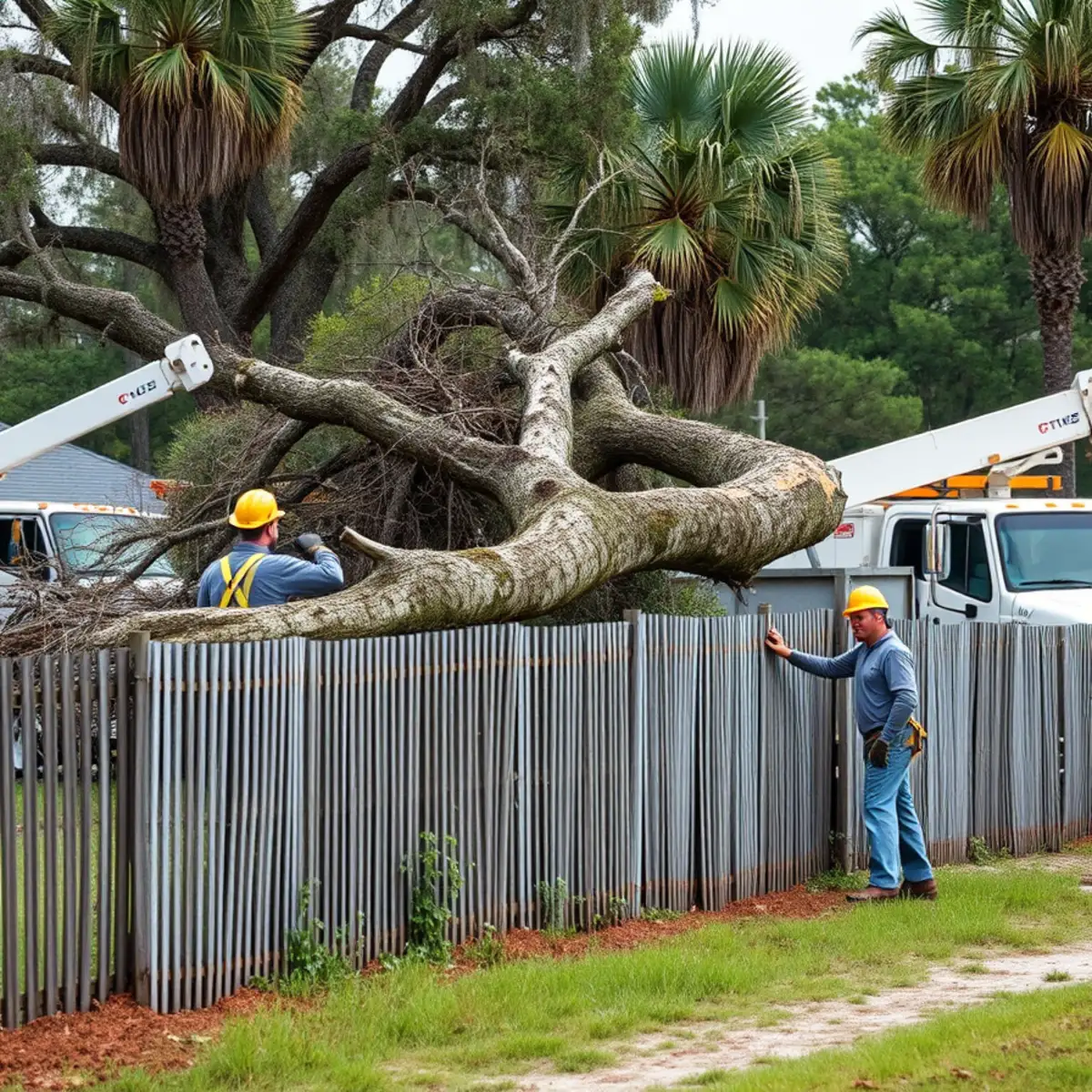
Your neighbor's big tree came down in the storm, except it did not land in their yard, it landed in yours, maybe on your fence or your shed. Your gut says they should pay, because it was their tree. It is one of the most common and most misunderstood questions in tree work, and the answer under Georgia law usually surprises people. I am not a lawyer, and this is general information rather than legal advice, but here is how it typically shakes out.
The default answer: it is probably your problem
This feels unfair, so brace for it. In Georgia, when a healthy tree falls due to a storm or other act of nature, the damage is generally the responsibility of the property owner where the tree landed, not the owner of the tree. If your neighbor's healthy oak blew onto your property, your homeowners insurance is typically the one you file with, and the tree became yours to deal with the moment it crossed the line.
The logic is that nobody controls the weather. A storm is not the tree owner's fault, so the loss falls where it lands. Where the tree grew does not decide who pays, what caused it to fall does.
When negligence flips the answer
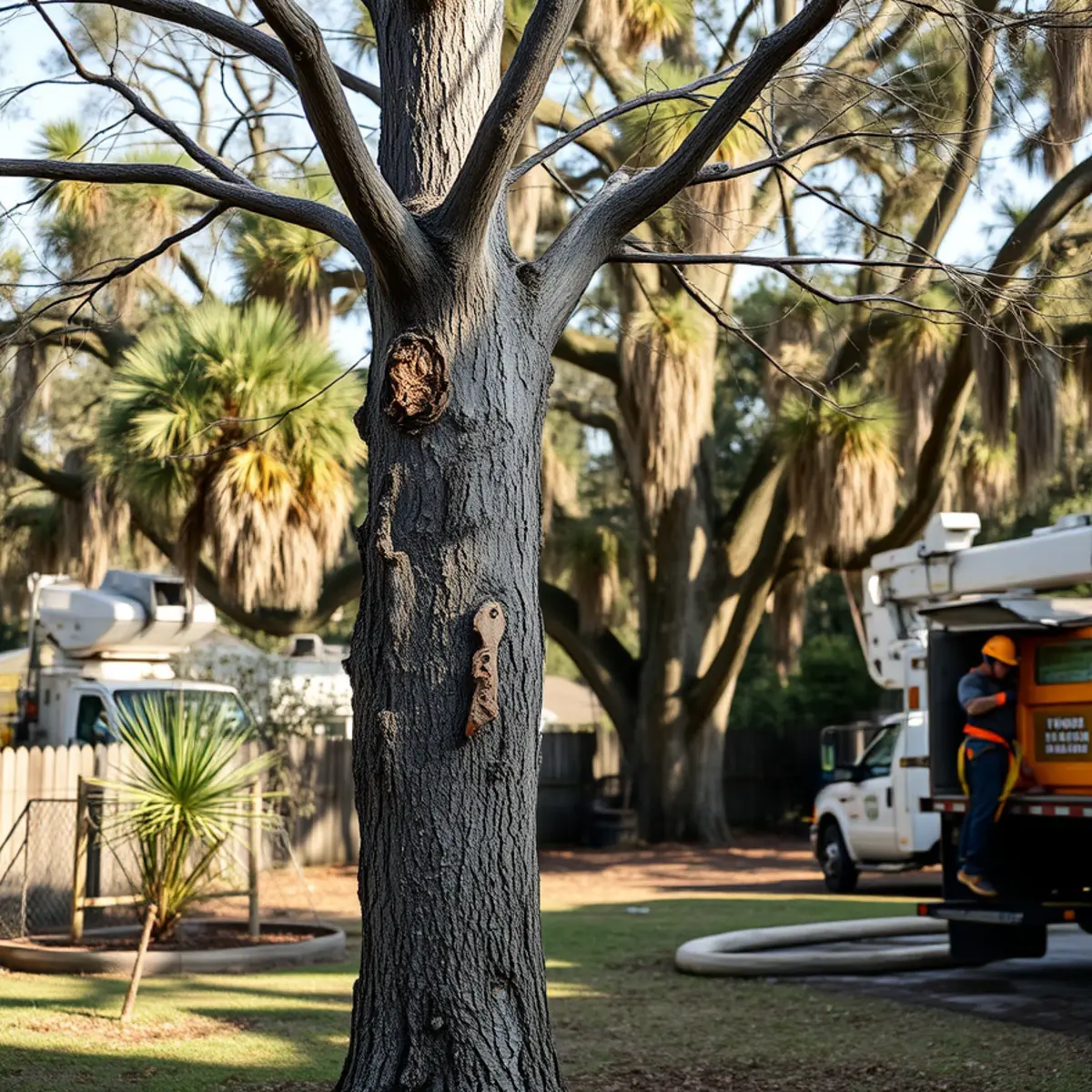
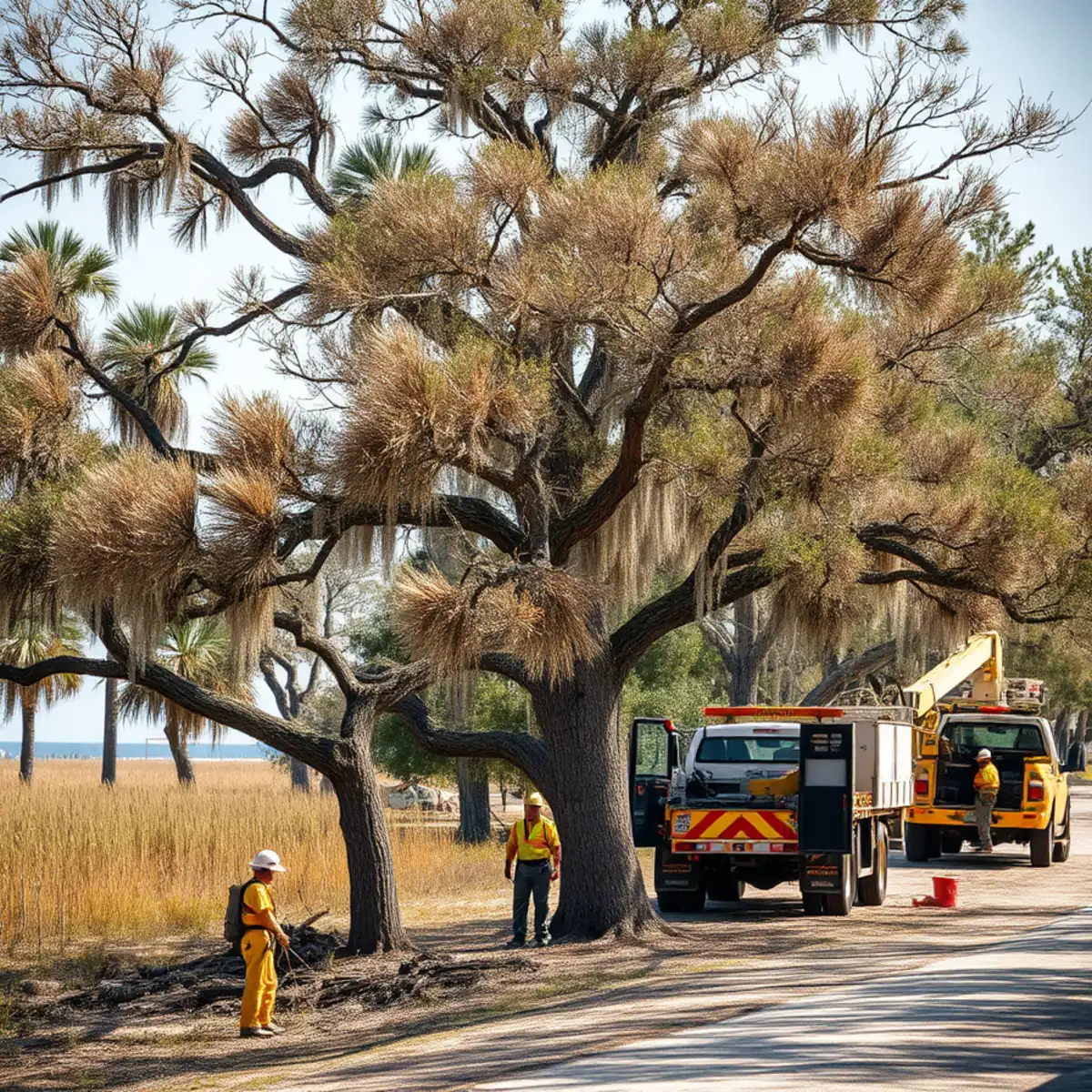
Here is the important exception. If the tree was visibly dead, diseased, or dangerous, and the owner knew or reasonably should have known, then the storm is no longer the whole story. A neighbor who ignored an obviously hazardous tree may be found negligent, which can shift responsibility to them or their insurer.
The key word is notice. Courts generally look at whether the tree's danger was apparent and whether the owner had reason to act. A green, healthy tree that failed is an act of nature. A long-dead trunk that everyone on the street could see was a maintenance failure. That distinction is the whole ballgame.
- Healthy tree, storm: almost always the landing property's responsibility and insurance.
- Obviously dead or diseased tree the owner was warned about: the owner may bear liability for negligence.
- You warned them in writing beforehand: that written notice is powerful evidence if the tree later fails.
What to do the day it happens
Regardless of who ultimately pays, the immediate steps are the same, and they protect you either way.
- 1Photograph everything before the tree is moved, including the base and, if you can see it, whether the fallen wood looks alive or rotten.
- 2Check for downed lines and keep everyone clear until the utility handles them.
- 3Call your own insurer to open a claim. Do this even if you think your neighbor is at fault, because your carrier can pursue theirs if negligence applies.
- 4Keep the tone with your neighbor civil. Adversarial neighbors make claims harder, not easier.
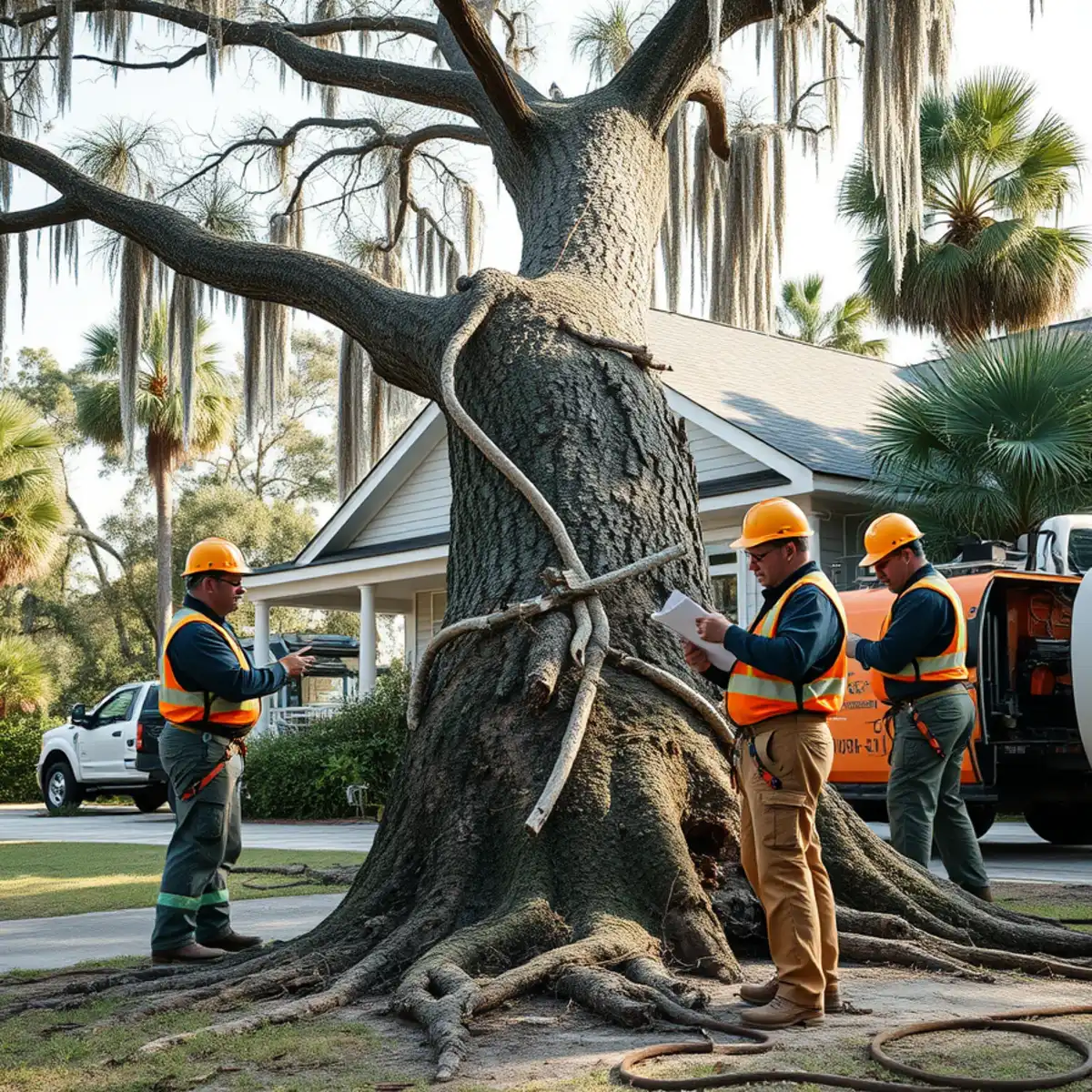
The physical work of getting the tree off your fence and out of your yard is a straightforward fallen tree removal job, and if it came down as part of a larger storm event, it may fall under storm damage tree removal on your claim. Either way, get it documented before it is cut, because once it is bucked into rounds the evidence of whether it was rotten is gone.
Where the tree grew does not decide who pays. Whether it was healthy or a known hazard usually does.
The uncomfortable truth about neighbor disputes
Even when negligence is arguable, pursuing a neighbor is slow, and insurers often just settle it between themselves. My honest advice: file your own claim, document the tree's condition thoroughly, and let the insurance companies sort out subrogation rather than turning it into a driveway argument. If the wood was clearly dead, say so to your adjuster and provide the photos, and let the professionals fight that battle.
We clear these across the region, from the dense older lots in Chatham County to properties out around Statesboro, and we will document the tree's condition in writing for your claim before we ever start cutting. That record is often worth more than the removal itself when there is a question of fault.
Frequently Asked Questions
Usually not. In Georgia, a healthy tree that falls in a storm is generally treated as an act of nature, so it typically becomes the responsibility of the property it landed on. Your own insurance is usually the one to file with.
That changes things. If the owner knew or should have known the tree was dangerous and did nothing, they may be found negligent. Written notice you gave beforehand is strong evidence. Document the tree's condition and tell your insurer.
Start with your own insurer, even if you believe your neighbor is at fault. Your carrier can pursue the neighbor's insurance through subrogation if negligence applies, which is usually smoother than pursuing it yourself.
Need help with a tree in the Savannah area?
Free estimates and 24/7 emergency dispatch across coastal Georgia.